Watermelon
Print S
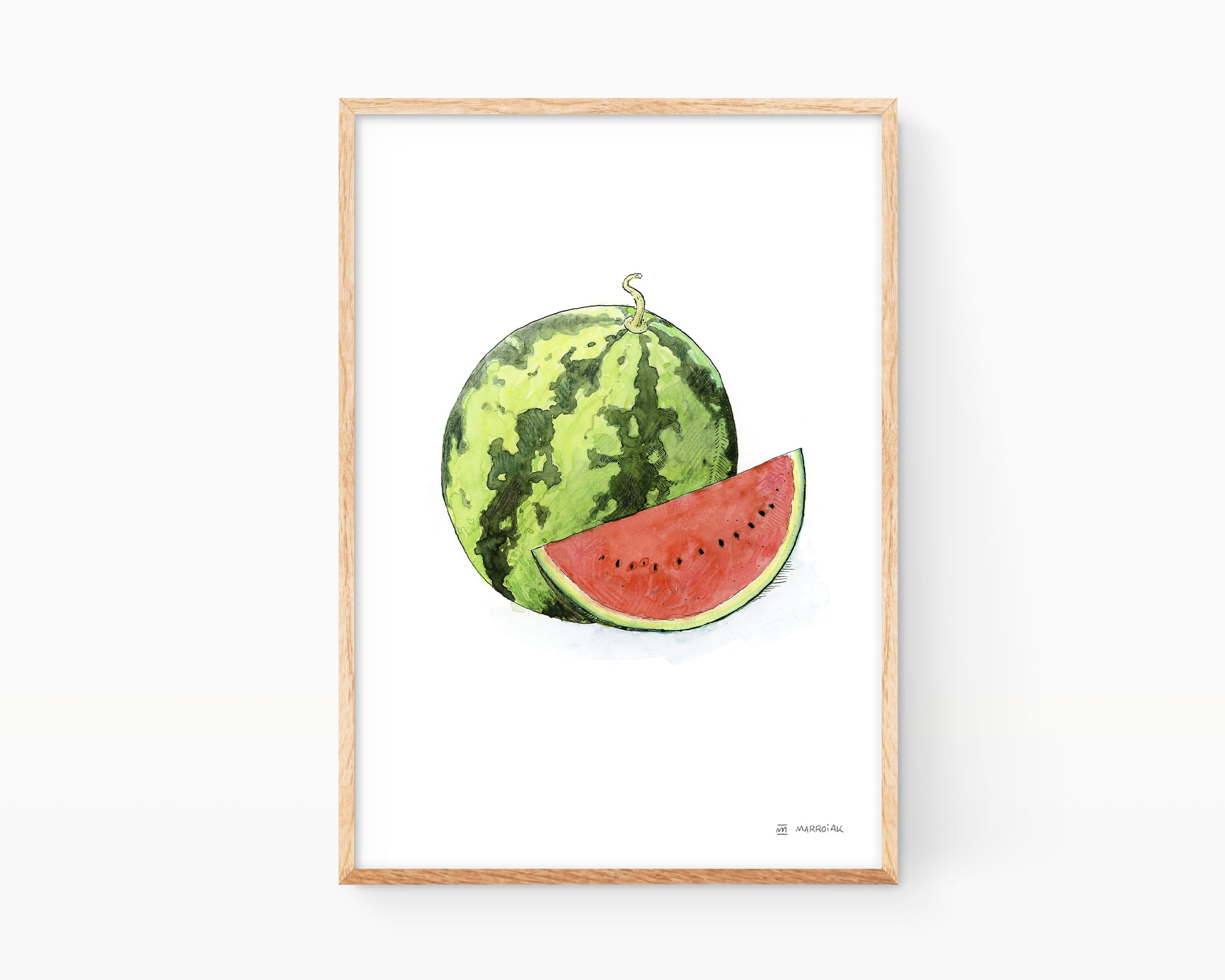
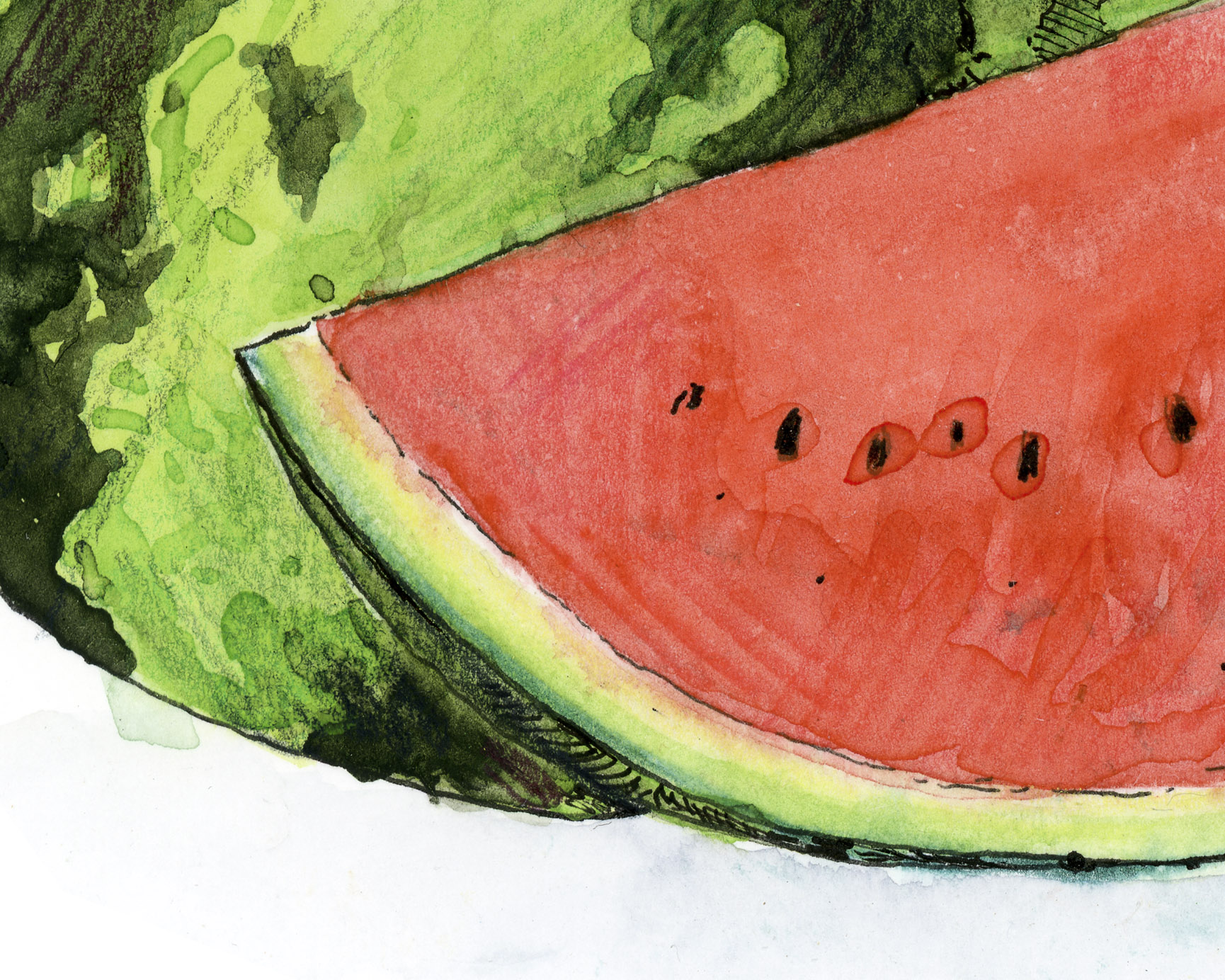
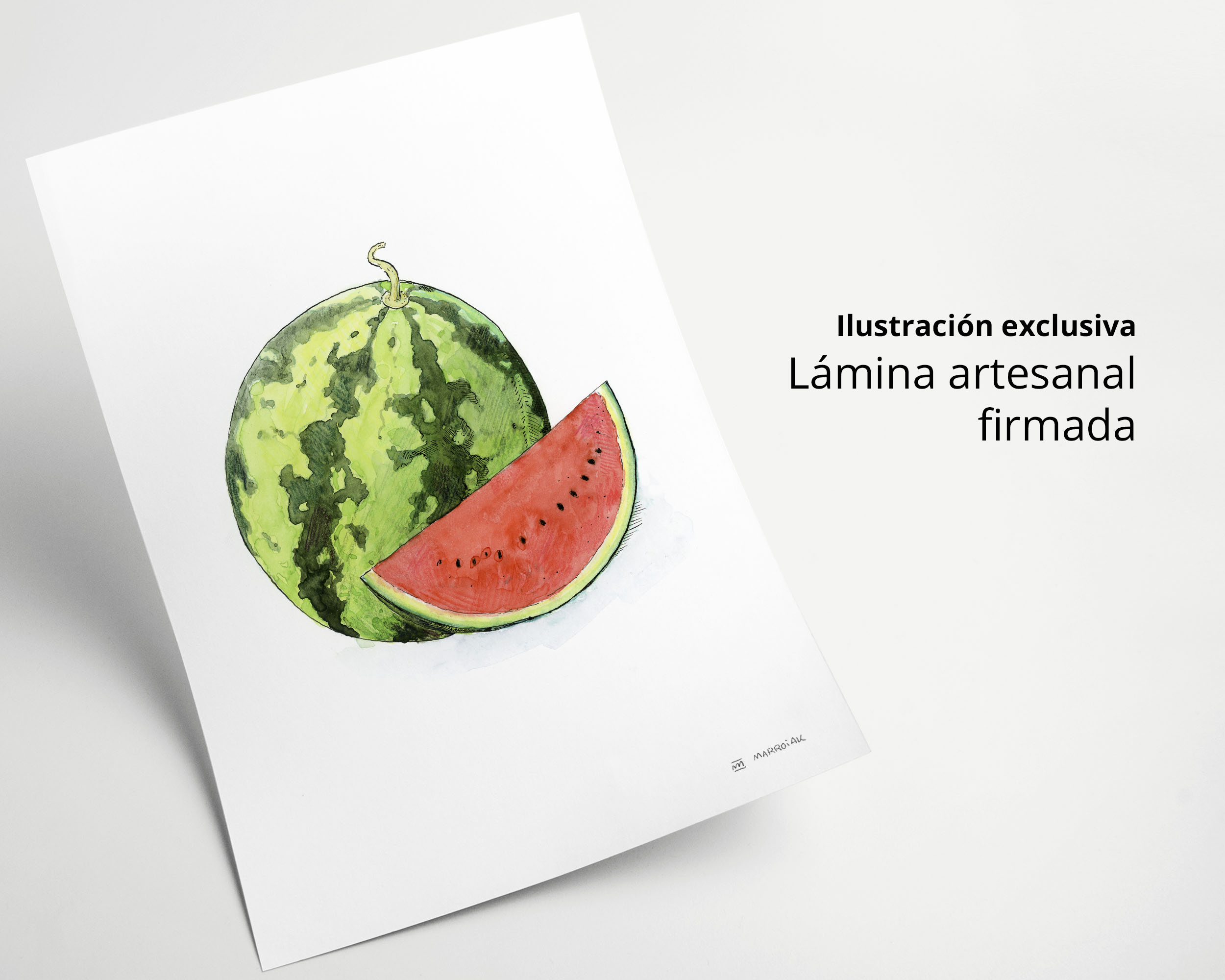
Print with an illustration of a watermelon opened in half. Drawing originally done in ink and watercolors on paper.
35€
In stock
| Artist | MARROIAK |
|---|---|
| Authenticity | Work signed, numbered and dated |
| Size | S 14.8 x 21 cm |
| Medium | Illustration printed on Hahnemühle 188gr. museum paper. |
Optional add-onsNatural wood frame (Add as an accessory) |
Shipping
Import taxes are estimates to help you plan ahead. Final charges may vary slightly based on local customs.
How to pay
New: Bizum and Transfer
Secure payments with SSL encryption.
Contact with me
Print with an illustration of a watermelon. Drawing originally done in ink and watercolors on paper.
ABOUT WATERMELON
Watermelon is a plant of the Cucurbitaceae family. It is native to Africa with a great presence and diffusion all over the world. It is widely cultivated all over the world due to its fruit, perhaps the most desired by children and adults and very much associated with summer.
It is a herbaceous plant of annual cycle, climbing or creeping, of rough texture, with stems provided with tendrils. The flowers are yellow, large and unisexual.
The fruit of the plant is large (usually more than four kilos), fleshy and juicy (more than 90% is water), almost spherical, smooth texture without porosities, green in two or more shades. The flesh is red in color and the flesh is generally sweet in flavor (more rarely yellow and bitter).
The numerous seeds can measure up to 1 cm in length, are black, brown or white in color and rich in vitamin E. They have been used in folk medicine and are also consumed roasted as food.
History
Watermelons were originally cultivated for their high water content and were stored for consumption during dry seasons, not only as a source of food, but also as a method of water storage. In the Dead Sea region, watermelon seeds were found in ancient settlements.
At a prehistoric archaeological site in southwestern Libya, many seeds of wild watermelon (C. lanatus) five thousand years old. This discovery may support the possibility that the plant was more widely distributed in the past.
Watermelon in popular culture
In Valencia it was a common practice to leave the watermelon in the irrigation ponds for a few hours to cool it, it was hung on a rope to be able to pull it once it was to be consumed.
JAPANESE INSPIRATION
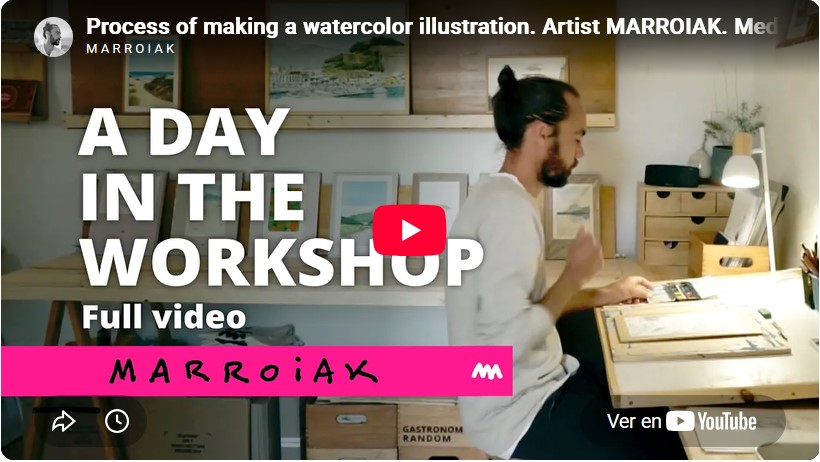
Each piece is made following a long work process inspired by the technique and style of Japanese ukiyo-e prints, using traditional materials such as watercolor, ink, brushes and pens. Learn more about the artist
Mentions and collaborations








Customer reviews
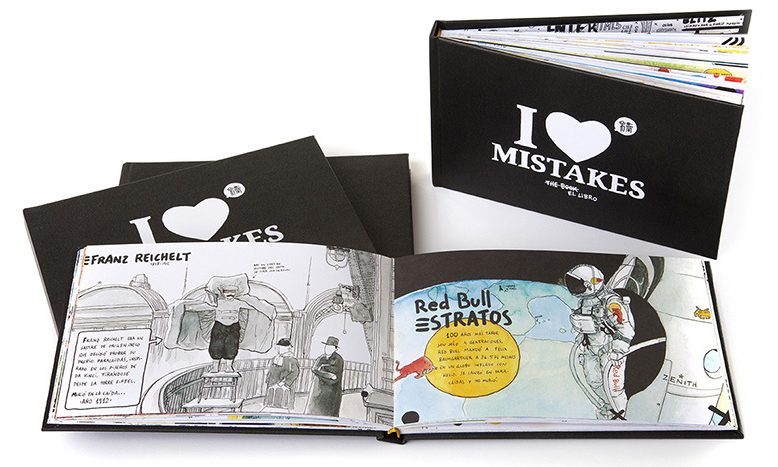
I just received the book and have read a couple of pages. I am delighted with the result, the truth is that I don't know if I didn't remember what it was going to be or it was not explained, but it far exceeds what I expected. It is a gem. | Review left on Verkami
I Love Mistakes is a book of illustrations and reflections on error. The author, Marroiak, is an independent artist specialized in handmade illustration. The book was published in 2015 and funded through a crowdfunding campaign on the Verkami platform.The book is divided into two parts. In the first part, Marroiak presents a series of illustrations depicting different types of mistakes. These illustrations are colorful and fun, and convey a message of optimism and acceptance of error.In the second part, Marroiak reflects on error from a philosophical and psychological point of view. The author argues that mistakes are an inevitable part of life, and that they can be an opportunity for learning and growth.It is a book that offers a positive and constructive view of error. The book is recommended for people of all ages who want to reflect on the meaning of error and its role in our lives.

I met him through networks and bought the book of La Safor Ilustrada, which is great. Today I was able to go visit it, on its third open day, and I took three very nice illustrations. Very nice, thank you! Cheers and strength (Google review).
Very happy with the style and quality of the plates. Highly recommended.
Discover more products from Marroiak
-

The town dawns in fog
Print M 45€ -

Albufera of Valencia
Print L 90€ -

Blue door, Jávea
Print From 35€ This product has multiple variants. The options may be chosen on the product page -

Oranges. Watercolor illustration
45€ -

Rajolars, Oliva
Print S 35€ -
Jardins de la Marquesa, Gandia
Print L 90€ -
Tiger
Print S 35€ -
Alqueria del Duc
Print M 45€