
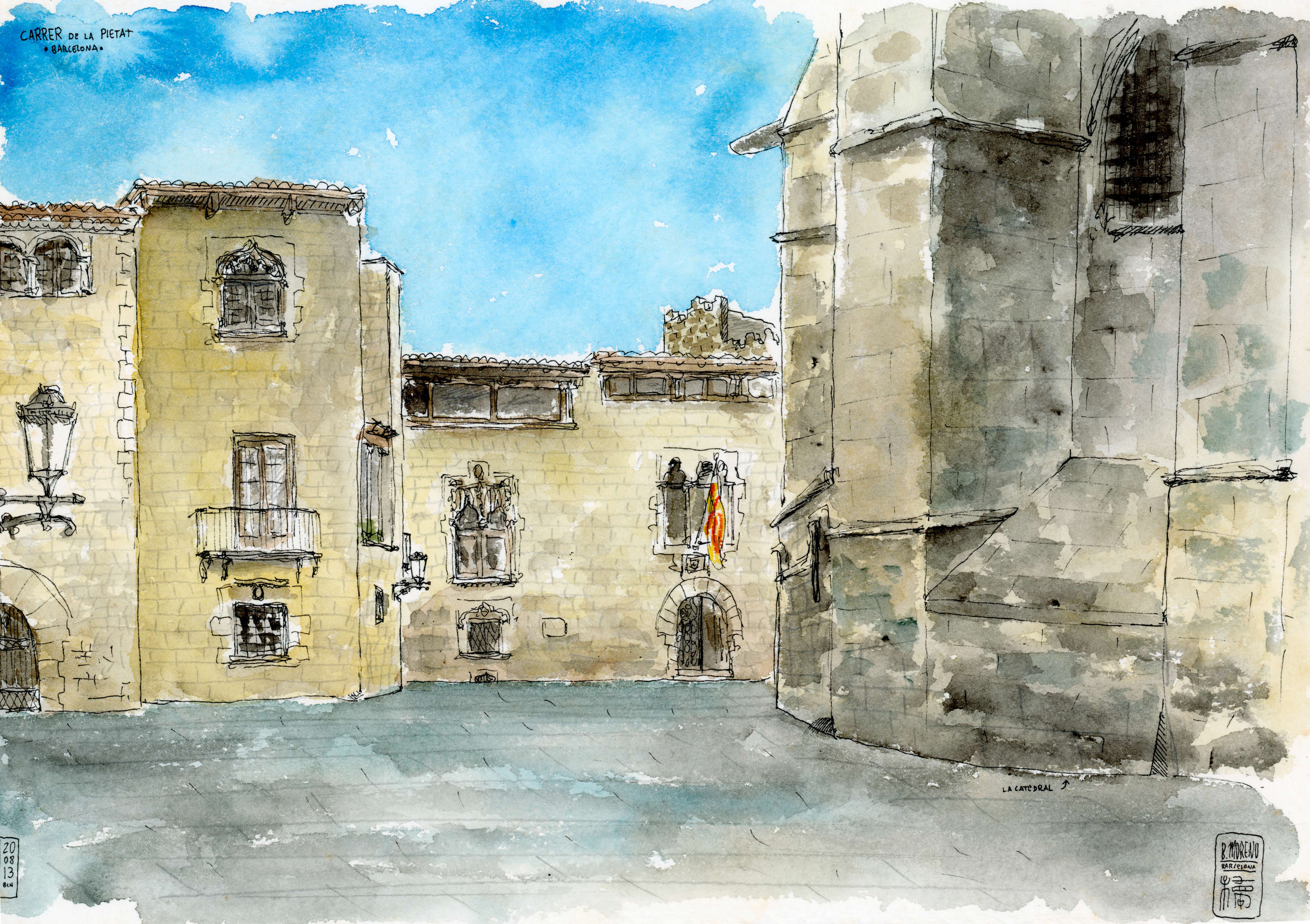
Carrer de la Pietat Barcelona original watercolor
Posted on - Leave a comment

Oranges

Today I bring you a text that Rodri shared in your newsletter and I liked it a lot.

I always like to use the metaphor of an orange.

I love oranges. Maybe it's because I live in Florida.

It's a very simple metaphor.

You grab an orange and squeeze it as hard as you can.

What's going to come out?

Orange juice.

No matter how many times you squeeze it, apple juice will never come out. Grapefruit juice will never come out.

The only thing that's going to come out is juice. orange.

And the next question is:

Because?

Why is it that when you squeeze an orange as hard as you can, orange juice comes out?

I once asked that question in Toronto. There was a little girl sitting right in the front row.

He looked at me and said, "What a silly question. Because that's what's inside.".

I told him: Well, that's the answer. You're very intelligent.

She smiled, delighted.

But that's the truth.

The reason orange juice comes out when you squeeze an orange is because that's what's inside.

Now let's take the metaphor a little further.

Someone is putting pressure on you.

Someone says something about you that you don't like. Someone treats you in a way that you find offensive. Someone does or says something that hurts you.

And from you comes anger, hatred, bitterness, tension, fear, anxiety, stress.

You immediately say, “This came out of me because of how he spoke to me.” “It was because of the way she said that.” “It was because they did that.”.

But the truth is that what comes out is what's inside.

And if you don't like what's inside, you can change it.

Now, if you ask me how orange juice gets inside an orange, I'd say I don't know…

I can't explain it. It's a mystery to me.

I simply enjoy the oranges of my life and give God the credit for that.

The original text is by Wayne Dyer 

Nice, isn't it?

 
PSToday we have added 3 new originals to this week's auctions. Here >

IMPORTANT! I need 17 new YouTube subscribers for something we're working on. Subscribe and we'll see about the rest. Here >
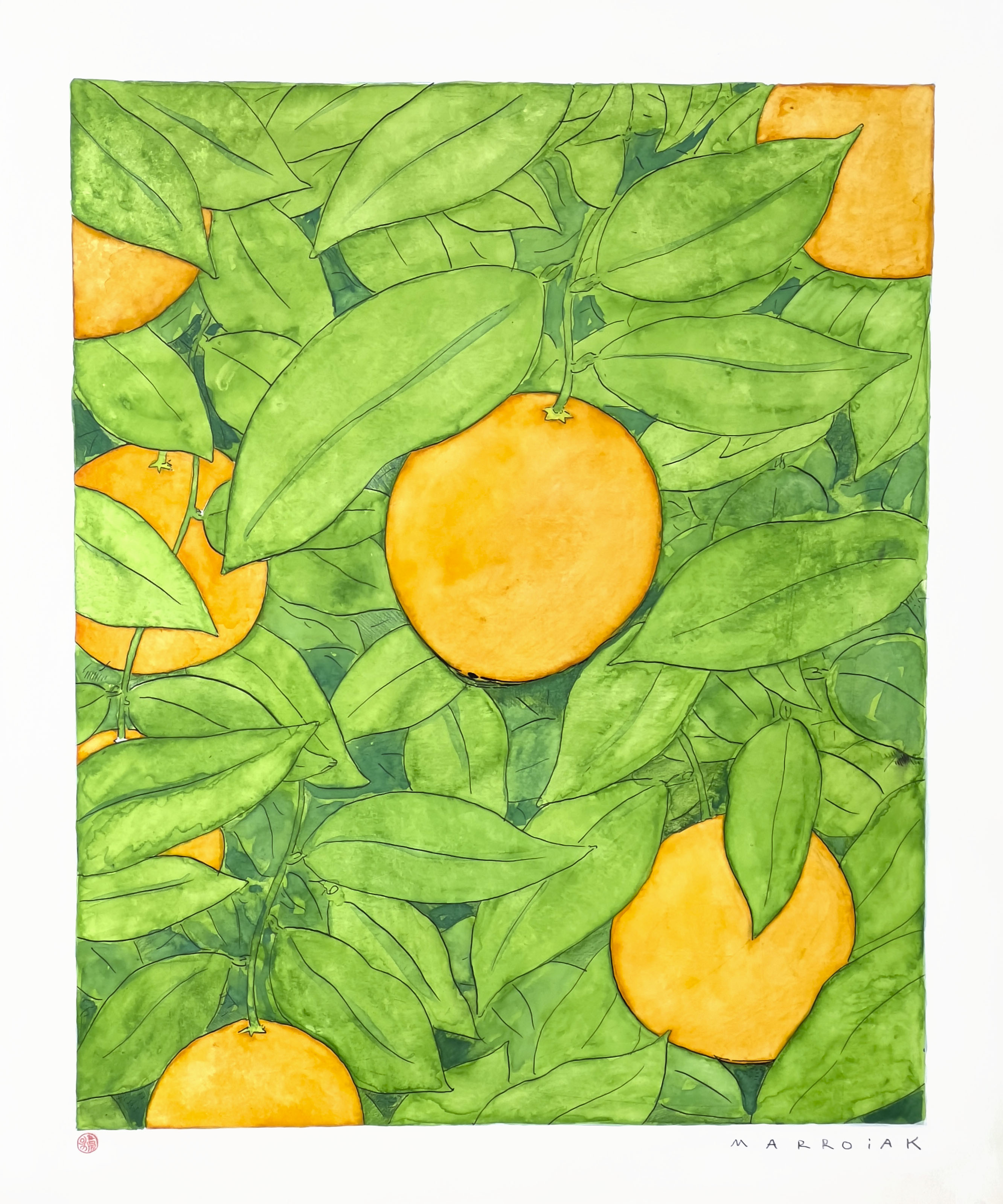
Photo 2026 05 04 13.20.22
Posted on - 2 Comments

At the highest level

Since last February 17, we have sold 93 original pieces through the Clandestine Auctions. And when I say originals, I mean 93 unique works of art, no prints or limited editions.

If we continue at this rate, the projection for the end of the year will place us at around 600 works Originals sold. It's a very high turnover volume.

Very, very tall.

The other day I started comparing it to the European art market and it would look like this...

EUROPEAN ARTIST RANKINGS
Sales forecast based on available data (Single project / 2025-2026):

  1. Marroiak (Projection) ~590 pieces (Watercolors, sketches, and mixed media)
  2. David Hockney: ~300 pieces (Drawings and sketches).
  3. Damien Hirst: ~270 pieces (Study work).
  4. Tracey Emin: ~210 pieces (Drawings and mixed media).
  5. Maseda: ~200 pieces (Contemporary Portrait).
  6. Yayoi Kusama (this one is not European): ~170 pieces (Unique work on paper).
  7. Anselm Kiefer: ~110 pieces (Mixed and paper).
  8. Miquel Barceló: ~100 pieces (Watercolors and ceramics).
  9. Secundino Hernández: ~80 pieces (Painting and drawing).

Thank you to everyone who bids and to those who are making this small workshop in Oliva achieve something so great.

See you at the Clandestine Auctions

Posted on - Leave a comment

The big wave

The Great Wave of Kanagawa is perhaps the best known work of the style we usually call Ukiyo-e. 

It was published in about 1830 and soon became very popular among European artists and collectors.

The curious thing about Japanese prints is that the process was openly collaborative and several artists and artisans were involved in the process.

Hokusai (the author of the Great Wave) was the one who conceived, planned and executed the drawing, perhaps with some touches of color.

Then a craftsman transferred that drawing to the wooden planks and patiently carved them.

One plate was carved for each color, plus the line (probably 7 in total).

Finally, the printers inked the wooden molds and made the prints.


Thousands of copies were made of each drawing.

How great the Japanese...

Posted on - Leave a comment

How to prevent perfectionism from killing your creativity

There is a tool that I introduced some time ago in the workshop that is giving me very good results. Maybe it will help you too.

Because the thing is this: